WebWoW November 3 update: the checks that changed
The WebWoW November 3 update addresses pet behavior, Death Knight entry and several follow-up issues after the thirty-specialization release. The original Arena Journal dates this gameplay note November 3, 2026. For a player, the next useful step is to recheck the relevant behavior in a safe practice context, not to assume an old failed attempt still describes the current client.
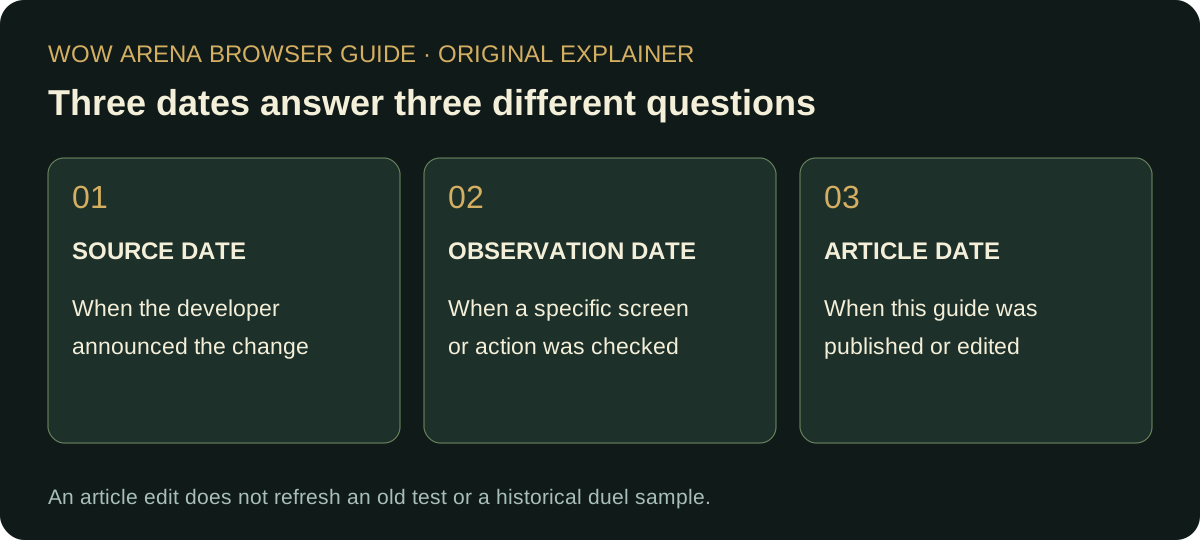
This article explains the developer’s note and separates it from our observation. We saw the ten-class character screen and connected a Shadow Priest guest to the world on November 3. We did not create a Death Knight, fight a duel or test each pet command. The announced fixes below remain attributed to the WebWoW team rather than being presented as our own completed regression tests.
| Developer note | What a player should check | Evidence boundary |
|---|---|---|
| Pets begin with a defensive order and respond to their owner’s attacks | Distinguish the current pet order from the target you select | A stated default is not a test of every summon or specialization |
| Passive and Stay choices retain priority | Check whether you intentionally changed the order before reporting an idle pet | No pet-order input was tested in our Priest session |
| Death Knight creation and duel-request blocks fixed | Recheck the current class-selection and duel prompts | We observed the class choice; no Death Knight duel was completed |
| Hunter Call Pet and Revive Pet bars fixed | Inspect the current bar after updating or changing a build | Do not infer that all Hunter damage issues are resolved |
| Summon damage assigned to the owner in the meter | Read pet-inclusive totals before comparing two sessions | A meter fix does not establish a new balance ranking |
Pet orders: compare intent before reporting a failure
The developer describes a default defensive behavior: the pet follows the owner’s offensive action and returns when that action stops. It also says an explicit Passive or Stay order takes precedence. Those two statements should be read together. A pet that is following your retained order may not be reproducing the bug you intended to test.
A useful check records the character, specialization, visible pet order, chosen target and the action that should begin or stop an attack. Change one condition, then describe the result. Do not transfer a command from a different pet type or assume an official WoW macro is supported in this browser client.
The source also mentions Hunter bar fixes and damage-meter attribution for several summon types. If you compare a previous and current meter, note whether both totals count the owner and summons the same way. A changed attribution rule can change a display without establishing that a damage coefficient changed.
Death Knight access: a visible choice is the first stage
The source says the earlier realm block on creation and rejected duel requests were corrected. Our character-screen observation confirms that Death Knight is now among ten choices. Selecting that class, successfully creating or entering it and completing a duel are still separate stages.
If an old guide or video says there are nine classes, inspect the current selection screen. The November 2 release analysis explains the preceding ten-class, thirty-specialization change. A failed earlier creation attempt should be labeled with its date; do not keep quoting it as a permanent feature restriction after the developer announces a fix.
When a fresh attempt fails, capture the visible stage and response rather than repeatedly creating characters. Use the troubleshooting stages for entry and connection failures. Class availability in a picker cannot guarantee a responsive realm or an opponent in a particular region.
A focused post-update practice checklist
- Read the date on the original announcement. This is the November 3 follow-up, not the earlier thirty-spec launch or October balance snapshot.
- Choose the affected character and inspect its current action bar. Use the keybinding guide for the method, keeping its Shadow Priest example in scope.
- For a pet issue, note the displayed order and compare one offensive action with the expected response. Do not change several settings and then infer which change mattered.
- For a Death Knight issue, record whether the class choice, world entry or duel request is the stage that fails. We have not verified a complete duel here.
- If comparing damage totals, record the version or source date and whether summons are included. Avoid turning a display correction into a claimed win-rate improvement.
The notes also describe spell-name/icon refreshes and a class-picker layout that keeps the entry button visible. A changed label after an update should prompt a control-sheet review, not an assumption that the browser has lost all bindings.
A concrete pet-order check after the November 3 note
Consider an idle pet after the WebWoW November 3 update. Before calling it the same earlier bug, record whether the current order is Defensive, Passive or Stay. The announcement says an explicit Passive or Stay choice retains priority. An idle response under that retained order asks a different question from a pet failing to follow the owner’s offensive action under the described default.
Change only the condition you intend to compare in an appropriate practice context, then note the owner action, target and visible response. This is a proposed check based on the release note; our Shadow Priest visit did not perform it. A report following that sequence can help separate command intent from an unexplained failure without asserting that every pet or summon has already passed.
Original source, dates and follow-up
Primary source: WebWoW original site → News & Updates → the November 3, 2026 gameplay article about pets and Death Knights. We inspected that source on November 3. It does not supply an independently verified numeric client build identifier for this article.
Return to the update journal or the project overview. For an error in this analysis, send a dated correction. For a current game-service issue, use the original project’s checked community route.